
What Most Travelers Don't Know About Hawaii's Big Island
Hawaii's Big Island isn't simply a larger version of the other islands. It's a place of contrasts, with summits that can see snow in winter, black lava fields running down to turquoise water, cattle ranches in the uplands and rainforest on the windward coast. Most first-time visitors arrive expecting a beach holiday and leave having discovered something closer to a small continent.
That surprise is part of its appeal. The Big Island rewards travelers who give it time, choose their base carefully and treat the island as several destinations in one.
Here's what we tell clients before they go, and where our villas on the island sit.
Its Real Name Is Hawaii
The island's official name is Hawaiʻi, the same as the state. Locals and visitors call it the Big Island to avoid confusion, and you'll also hear it called Hawaii Island. It's the island that gave its name to the whole chain, and Kamehameha I, who united the Hawaiian Islands under one rule, was born in its North Kohala district.
That history is still visible. Puʻukoholā Heiau, a large stone temple Kamehameha built on the Kohala Coast, is now a national historic site, and ancient petroglyphs are carved into the lava along the same shoreline.
It Was Built by Five Volcanoes
The Big Island is made up of five volcanoes: Kohala, Mauna Kea, Hualālai, Mauna Loa and Kīlauea. Their slopes shape everything, from the weather to the color of the sand.
Mauna Kea's summit is home to astronomical observatories and is cold all year, with snow in some winters. Hawaiʻi Volcanoes National Park, on the island's southeast side, protects Kīlauea and part of Mauna Loa, with craters, lava landscapes and rainforest trails.
It Has Several Climates on One Island
The trade winds blow in from the northeast and drop much of their rain on the windward side. That's why Hilo and the east coast are green and wet, while the west-facing Kohala and Kona coasts are on the dry leeward side, with plenty of sunshine.
Within a single day, you can go from a hot lava-rock coastline to cool upland pasture to a chilly mountain summit. Pack accordingly:
Light clothes and sun protection for the coast
A warm layer for upcountry evenings
Proper cold-weather gear for a summit visit
A rain jacket if you're heading to the Hilo side
Its Beaches Come in More Than One Color
The Big Island has white-sand beaches on the Kohala Coast, black-sand beaches formed from volcanic rock, such as Punaluʻu on the southeast coast, and even a green-sand beach, Papakōlea, near the island's southern tip. Much of the coastline is lava rock rather than sand, which makes the sandy beaches you do find feel all the more prized.
According to our listings for Na Hale 1 and Artevilla, Anaehoʻomalu Bay is 5.2 miles away, Hapuna Beach 7 miles and Mauna Kea Beach 8.6 miles.
It's Bigger Than It Looks on the Map
This is the point most travelers underestimate. Our listings for Na Hale 1 and Artevilla put Waipiʻo Valley lookout 40.8 miles away, the Mauna Kea Observatories 56.3 miles and Hawaiʻi Volcanoes National Park around 96 miles.
That's why we suggest a few practical rules:
Rent a car. A car is the practical way to reach the island's highlights.
Pick one base. Moving between homes eats into your time. Stay in one place and plan day trips.
Plan the long days. The volcano park is a long way from the Kohala Coast, so give it a day of its own early in the trip.
Fly into the right airport. Kona International Airport serves the west coast, and Hilo International Airport serves the east.
There's More to the West Coast Than Beaches
The Kona district is known for its coffee, grown on the slopes of Hualālai and Mauna Loa. The uplands of Waimea and North Kohala are ranch country, with rolling green pasture that surprises people who picture the island as all lava and palms. And the waters off the west coast are known for snorkeling, diving and, in winter, humpback whales.
The Big Island also has a strong sense of Hawaiian culture, from historic sites along the coast to the traditions that shape daily life. Approach it with curiosity and respect, and the island opens up.
Where Our Big Island Villas Are
Our listing places Artevilla on the Kohala Coast, on the sunny northwest side, and all three homes suit beach days, golf and snorkeling.
Na Hale 1
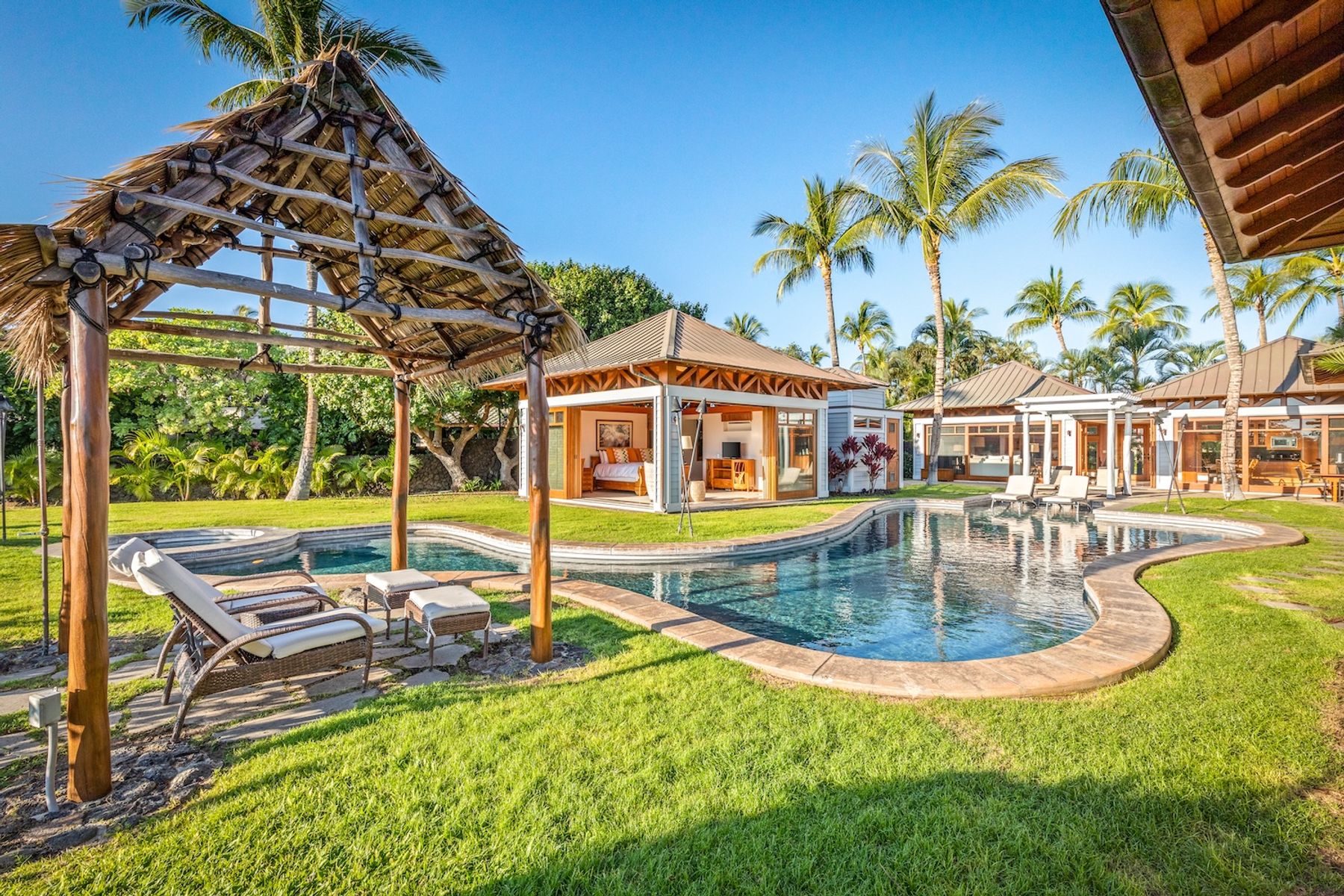
Set in a gated enclave close to the shoreline, Na Hale 1 is built for an easy, private rhythm. Its pod-style layout places separate bedroom suites around the private pool and hot tub, each with its own outdoor shower, and the open-plan living space and kitchen flow straight onto the pool terrace. The interiors take their cue from Balinese design. A golf cart is provided, and guests have access to select resort amenities nearby, including a beach club with a white-sand beach.
Blue Lagoon
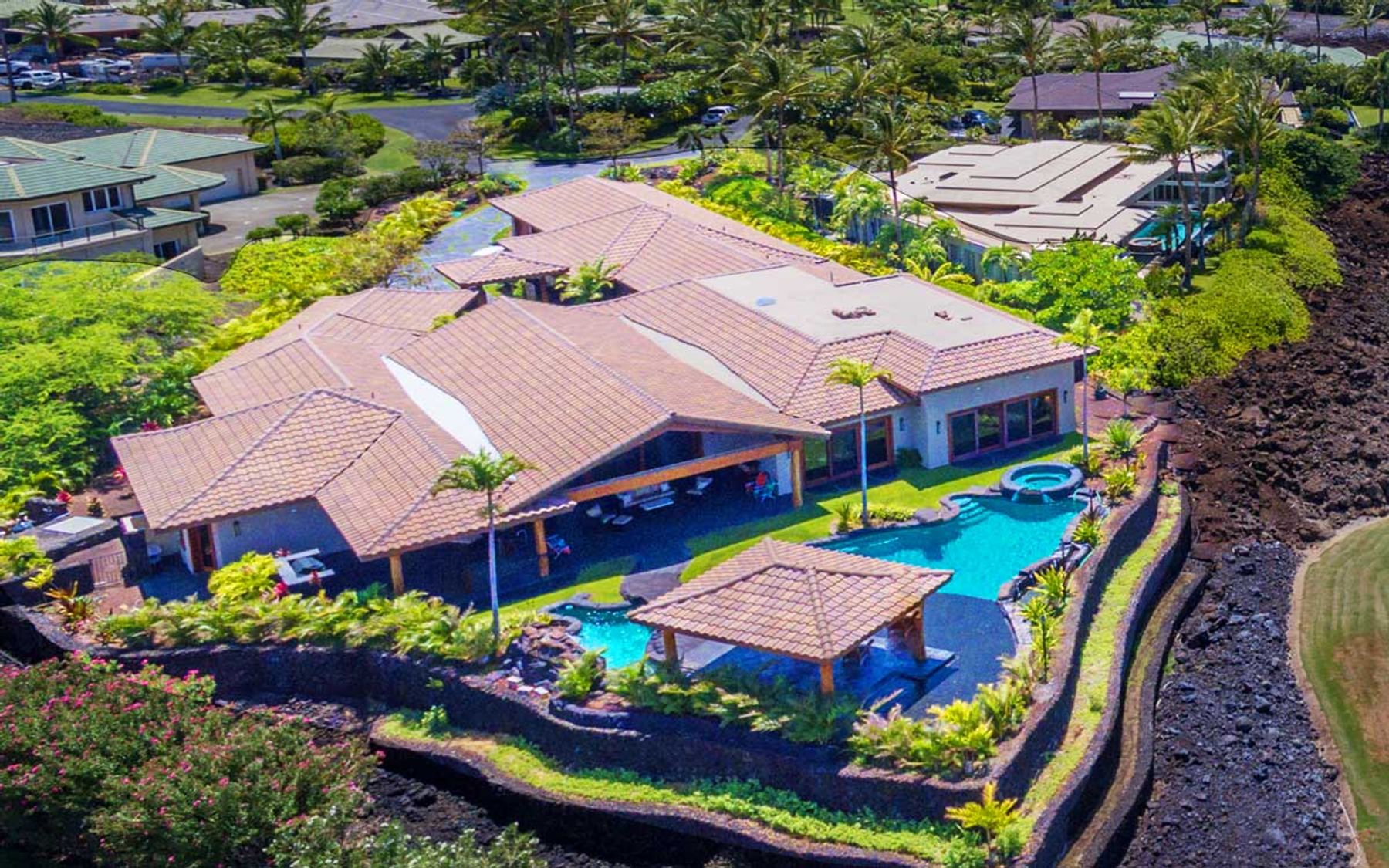
A larger family or group will appreciate Blue Lagoon, in a gated golf community on the Big Island. Its heated infinity pool, with a waterfall, a diving rock and an elevated spa, looks over the fairways toward the ocean and the island's volcanic summits. Wide accordion doors open the great room onto a poolside patio with a cocktail bar and barbecue, and there's a home theater for evenings in. Access to a beach club is included in the stay, and a private chef is available on request.
Artevilla
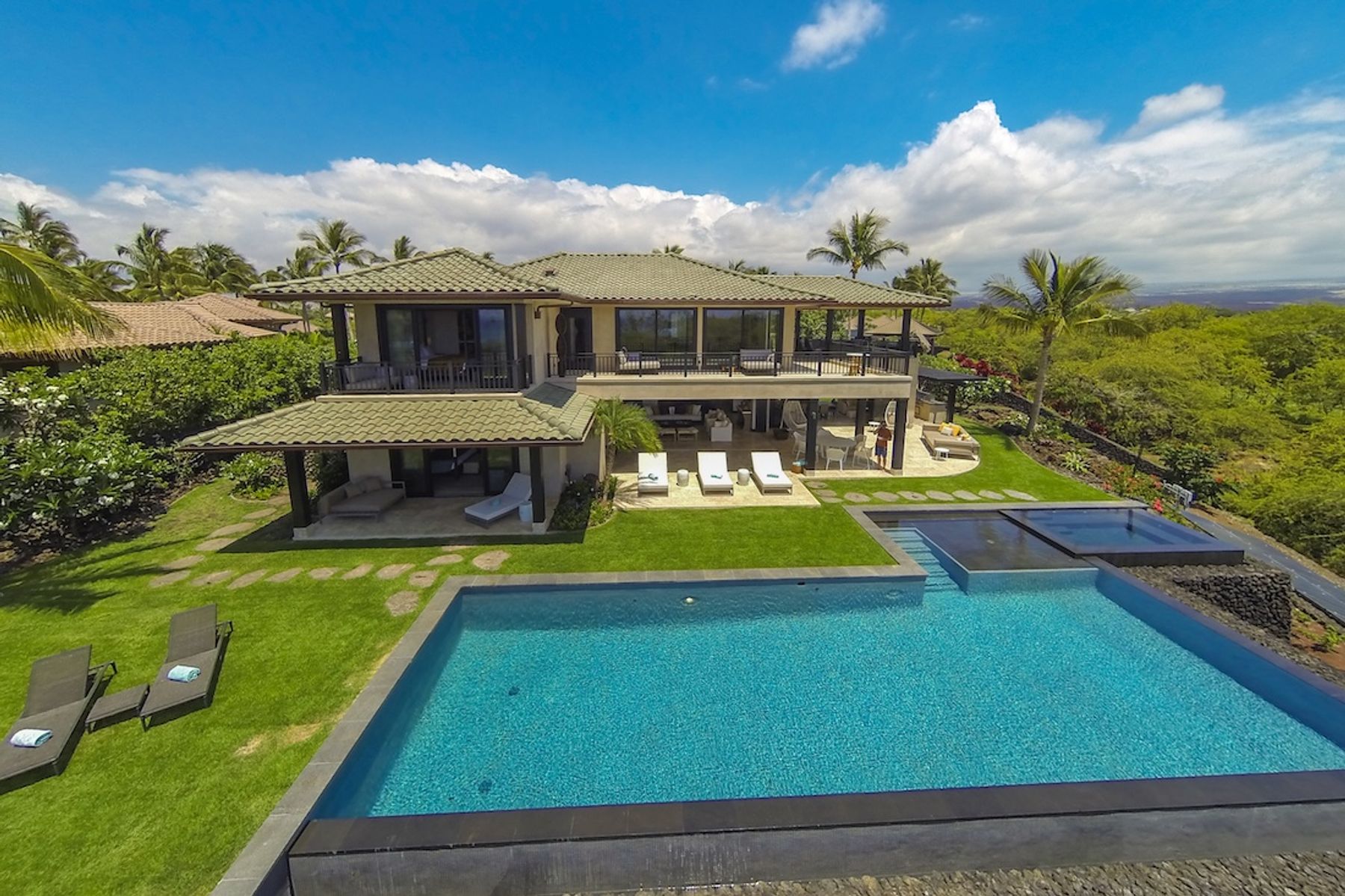
Sitting just above the shoreline in an enclave on the Kohala Coast, Artevilla blends contemporary design with a relaxed Hawaiian feel. Its great room opens fully to the outdoors, an upper-level lounge leads onto a lanai for sunset views, and the infinity pool has a shallow lounging shelf. The home runs mainly on solar power. Guests have access to a private beach club a short walk away, set beside a calm lagoon, as well as access to tennis and fitness facilities.
All three are vacation rentals with pools of their own, and each comes with concierge support. Na Hale 1 and Artevilla list a housekeeper as well, with daily light housekeeping at Artevilla. Like every home in our collection, each was personally inspected before joining it, and every stay includes a pre-arrival check.
Who the Big Island Suits
The island isn't for everyone, and that's part of its charm. It suits travelers who:
Want variety, from beach mornings to volcano and summit days
Enjoy driving and exploring rather than staying in one resort area
Value space and quiet over nightlife
Travel as a family or group and want a home with room to spread out
Are curious about Hawaiian history and culture as well as the scenery
If you'd rather walk to dinner every night and keep travel to a minimum, a shorter stay or a single coast is the better plan. For everyone else, a villa on the Kohala Coast gives you a calm, sunny base with the rest of the island open to day trips.
When to Go
The Big Island is warm all year. Winter, roughly November to April, brings more rain to the windward side, humpback whales offshore and colder summits. Summer is generally drier and calmer on many coasts. The Kohala Coast stays relatively dry in any season, which is one reason we favor it as a base.
The Central Pacific hurricane season runs from June 1 to November 30. The Christmas and New Year holidays and spring break are peak periods to book.
Getting the Most From Your Stay
What most travelers don't know about Hawaii's Big Island comes down to this: it's a destination you plan rather than simply visit. Choose a base on the dry Kohala Coast, rent a car, and give the big days, the volcano park, the summit and the valleys, room in your itinerary.
Since 1979, we've built our collection around the idea of a private hotel, and our Big Island homes are a natural fit for it. Explore our villas on the Big Island, compare them with the rest of our Hawaii villas and our wider United States collection, and we'll help you find the right home.

Our Destinations


