
What Makes Florida So Timeless?
Florida stays timeless because its pleasures never go out of date: warm water, soft light, palm-lined gardens and the simple joy of living outdoors for most of the year. For travelers considering luxury villas in Florida, that's the heart of the appeal. The state's coastal cities change constantly, yet the rhythm of a Florida day, from a morning swim to an evening on a waterfront terrace, feels much as it always has.
Here's what gives Florida its enduring pull, and how a private home lets you enjoy it on your own terms.
The Short Answer: Water, Light and Ease
Ask returning guests why they come back, and the answers rarely involve a single attraction. They talk about the water, which seems to be everywhere. They talk about the light, especially in the late afternoon. And they talk about how easy it feels to slow down.
Those qualities shape everything here, from the architecture to the way people spend their evenings. They're also why Florida works for so many kinds of travelers:
Families who want pools, beaches and room for everyone
Multi-generational groups who need space to gather and space to retreat
Couples looking for warmth, privacy and long dinners outdoors
Celebrations and small weddings that suit a garden or waterfront setting
Boating enthusiasts drawn to the bays, canals and the Intracoastal Waterway
Where Is Florida?
Florida is the long peninsula in the southeastern corner of the United States, with the Atlantic Ocean along its east coast and the Gulf to its west. At its southern tip, the island chain of the Florida Keys curves out into the sea, and just inland from the southern coast lies the vast wetland wilderness of Everglades National Park.
The state is large, and its regions differ. The north has a more Southern feel, with pine forests and older towns. Central Florida is known for its lakes and theme parks. South Florida, where our homes are concentrated, is a busy, international region that stretches along the Atlantic coast through Miami, Fort Lauderdale and Boca Raton.
The west coast has a different personality. Facing the Gulf, its towns and barrier islands watch the sun set over the water each evening, and its beaches are known for fine, pale sand and shells. To the south, the Florida Keys are linked to the mainland by the Overseas Highway, a long chain of bridges and causeways that carries the road from island to island. Each region could fill a trip on its own, which helps explain why Florida rewards repeat visits. You can come back for a different coast, a different season or a different pace, and the state still feels new while its essential pleasures stay reassuringly the same.
Getting There and Getting Around
South Florida is served by several major airports, including Miami International, Fort Lauderdale-Hollywood International and Palm Beach International. According to our listings, Fort Lauderdale-Hollywood International is about six miles from Hollywood Waterside, and Miami International is about 8.6 miles from Vista Calida and 10 miles from Coco Lifestyle.
Once you've arrived, a car or a private driver is the practical way to move between neighborhoods, beaches and marinas. For guests who love the water, a boat is a lovely way to see the coast, and our concierge team can help with transfers, car hire and boat charters.
A History Written on the Water
Part of Florida's timeless quality comes from how long people have been drawn here. Spanish explorer Juan Ponce de León reached the peninsula in 1513 and gave it its name, and the Spanish founded St. Augustine in 1565. Centuries of Spanish, British and American influence followed, each leaving traces in the architecture, food and names of the state.
In the 20th century, the railroad and later the airplane brought winter visitors south in growing numbers. Many came for a season and stayed for a lifetime. That tradition of escaping winter for Florida's warmth continues today, and it's one reason the state has such a deep culture of private homes, waterfront living and long stays.
Architecture That Has Aged Gracefully
Florida's buildings tell the story of each era that discovered it. The pastel Art Deco hotels and apartment buildings of Miami Beach date largely from the 1930s, with their rounded corners, neon trim and porthole windows. In the 1920s, Mediterranean Revival architecture, with its stucco walls, barrel-tile roofs and arched loggias, spread through towns like Coral Gables and Boca Raton.
After the Second World War came a wave of mid-century modern design, sometimes called Miami Modern, with its bold angles, breeze blocks and open-air lobbies. Today, contemporary homes add walls of glass, flat roofs and terraces that open fully to the outdoors.
What links these styles is a shared response to the climate: shade, cross-breezes, courtyards and a constant connection to the garden and the water. It's one reason older Florida buildings still feel so livable, and why a well-designed villa here feels at home in its setting.
Florida's Coastal Character
The coast is where most of Florida's luxury life unfolds, and on the southeast coast it takes several distinct forms.
Miami and Miami Beach
Miami is a true international city, with Latin American and Caribbean influences in its food, music and language. Its neighborhoods range from leafy residential enclaves to dense, glassy downtown towers, all wrapped around Biscayne Bay. Across the bay, Miami Beach sits on a barrier island, famous for its Art Deco Historic District and its Atlantic shoreline.
Fort Lauderdale and Hollywood
In Broward County, Fort Lauderdale is known for its network of canals and its strong boating culture, with many homes set on private docks. Also in Broward County, Hollywood has a more relaxed, residential feel, with its own beach and neighborhoods along the Intracoastal Waterway.
Boca Raton
In Palm Beach County, Boca Raton is associated with polished planning, manicured landscaping and Mediterranean-inspired architecture. It's a calm, composed counterpoint to Miami's energy.
When Is a Good Time to Visit Florida?
South Florida has two broad seasons, and each has its own appeal:
Winter and spring (roughly November to April) bring drier air, lower humidity and warm, sunny days. This is the traditional high season, and homes for the holidays and late winter are reserved early.
Summer and early autumn (roughly May to October) are hot and humid, with frequent afternoon thunderstorms that tend to pass fairly quickly. The water is at its warmest, and the pace is quieter.
The Atlantic hurricane season officially runs from June 1 to November 30. We suggest flexible plans and travel insurance for late-summer and autumn stays.
Food and Culture: A Blend That Keeps Evolving
Florida's dining culture reflects its many influences. In Miami, Cuban coffee, pastries and sandwiches are part of daily life, alongside cooking from across Latin America and the Caribbean. Seafood is central everywhere, from grilled snapper to stone crab, a seasonal favorite during the cooler months. And Key lime pie, named for the small, tart limes of the Keys, remains a fixture on dessert menus statewide.
Culturally, the state's cities have grown into serious destinations for art, design and architecture. Galleries, museums and public art are part of everyday life in Miami, and the pastel facades of Miami Beach's Art Deco buildings are a reminder of how long design has shaped the region.
Outdoors, there's plenty to fill the days: paddleboarding on calm bays, fishing offshore, cycling along the waterfront, or exploring the mangroves and wetlands of the Everglades with a guide.
Is Florida Good for Families?
Yes, and that's a large part of its staying power. Florida combines warm water, outdoor space and a relaxed pace that works for every age. Children can spend whole days between the pool and the beach, while grandparents enjoy the mild winter weather and shaded terraces.
Beyond the beach, families can explore the Everglades by boat with a guide, spot manatees in sheltered waters during the cooler months, cycle waterfront paths or spend a day on a fishing charter. Central Florida's theme parks are another option for families who want them as part of a longer trip.
A private home makes all of this easier. Meals happen on your schedule, naps happen in quiet bedrooms, and everyone has room to spread out at the end of the day.
Why a Private Villa Suits Florida
Florida's lifestyle is built around being outside, and a private villa lets you live that way all day. Instead of sharing a hotel pool, you have your own. Instead of booking a table for every meal, you can grill on the terrace, swim at midnight and gather your group around one long table.
Luxury villas in Florida also offer something hotels rarely can: water at your doorstep. Many of the region's homes sit on bays, canals or inlets, with docks, waterfront terraces and pools that look across the water.
Our Florida Homes
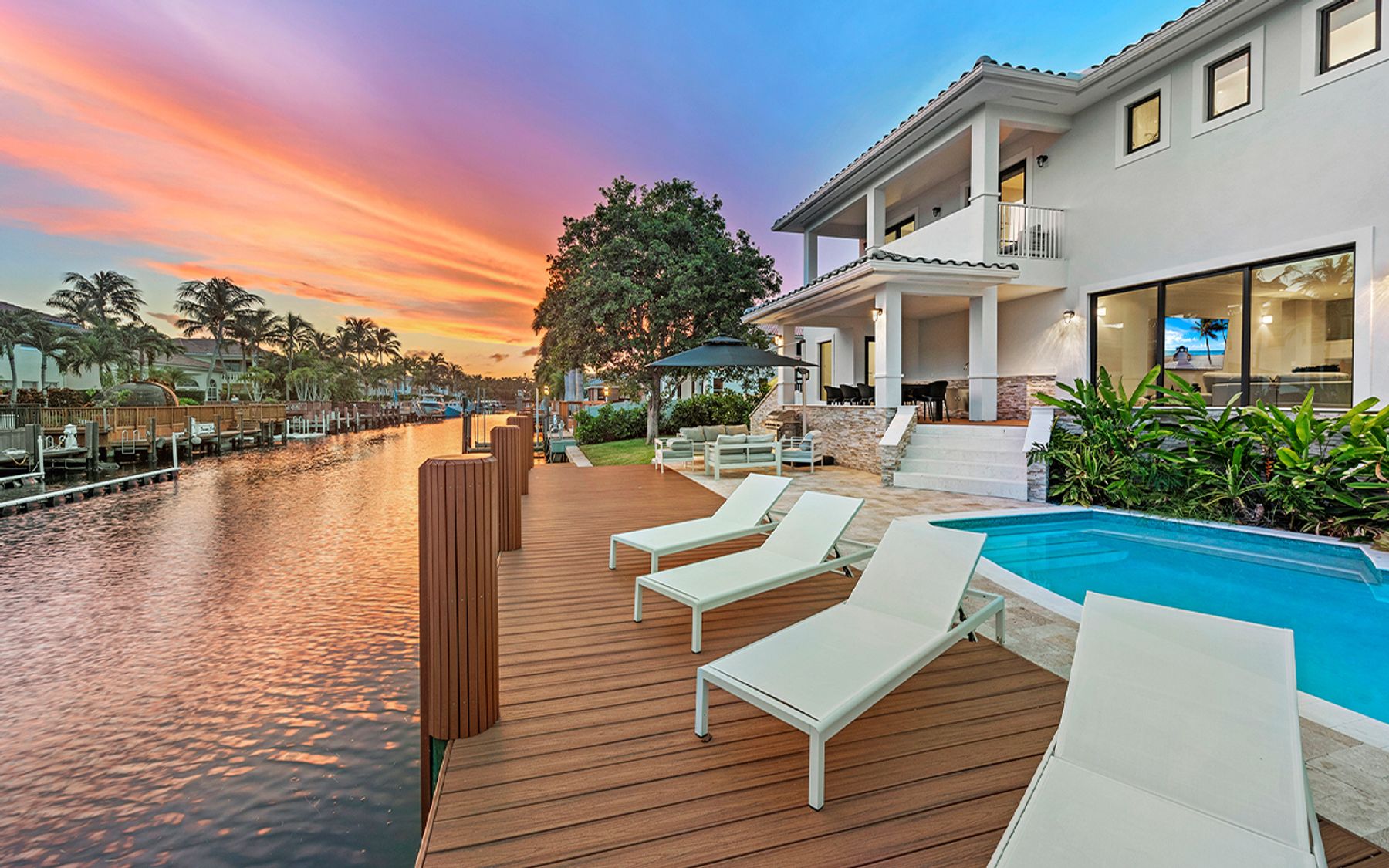
Our Florida collection is concentrated on the southeast coast, and these three homes show its range.
On a waterfront lot in the South Lake area of Hollywood, Hollywood Waterside sits within a gated community, with direct ocean access and its own boat dock. Outside, there's a pool with sun loungers, an outdoor wet bar and a barbecue; inside, water views carry through the living spaces, and a games room with pool and ping-pong tables keeps everyone entertained. According to our listing, Fort Lauderdale-Hollywood International Airport is about six miles away.
In Miami's leafy Miami Shores neighborhood, Vista Calida blends Moroccan influences with relaxed South Florida living. Polished concrete floors, natural wood and African-inspired details give the interior a calm, refined character, while the heated pool, terrace and alfresco dining area draw life outdoors. Each bedroom opens onto its own patio or terrace.
In Coconut Grove, Coco Lifestyle sits along a protected waterfront inlet, with a multi-level terrace, a water-facing pool and a lounge that opens to the water's edge. Inside, high cement ceilings and floating glass staircases set a bold, modern tone, and there's an elevator, a gym, a wet bar and a games room with a billiards table.
All three list concierge services and midweek housekeeping. Every home in our collection is personally inspected before it joins, and we carry out a pre-arrival check before every stay.
Planning Advice for a Florida Villa Holiday
A few decisions will shape your stay more than anything else:
Choose your setting. A canal or waterfront home suits boaters, while a garden home in Miami Shores offers privacy within Miami itself.
Book winter early. The holiday weeks and late winter are in high demand.
Think about the water. If boating matters, look for a home with its own dock, like Hollywood Waterside.
Plan for the heat. In summer, schedule outdoor outings for the morning and late afternoon.
Ask early about events. If you're planning a celebration or a villa wedding, tell us at the start so we can suggest homes whose rules and outdoor space suit it.
How Long Should You Stay in Florida?
Five to seven nights suits a single base on the southeast coast, with time for beach days, boating, dining and perhaps an excursion into the Everglades. A longer stay of ten days or more lets you combine two settings, such as a waterfront home in Hollywood with a few nights in Miami, or a coastal stay with a trip to the Keys.
Many of our returning guests treat Florida as a winter escape and stay longer still. If that appeals, our team can help you compare homes across our Florida villa collection with an eye on space, setting and access to the water.
The Timeless Appeal of a Florida Stay
Florida's appeal isn't in any single place. It's in the everyday pleasures that have drawn visitors for more than a century: warm water, open skies, long evenings outside. Those things don't go out of fashion.
We've been arranging private villa stays since 1979, and we'd be glad to help you find the right home among our luxury villas in Florida, whether you're planning a winter escape, a family reunion or a celebration by the water.

Our Destinations


