
When Is the Best Time to Visit Napa Valley?
The best time to visit Napa Valley, for most wine lovers, is late summer through autumn, when the harvest is under way and the days stay warm and dry. Every season has its own appeal, though. Spring brings green hills and waking vines, summer brings long, hot afternoons, and winter turns the valley slow, cool and green.
Napa Valley runs north from San Pablo Bay, with the Mayacamas Mountains on its western side and the Vaca Mountains to the east. Like much of coastal California, it has a Mediterranean climate: dry summers, wet winters and a wide swing between warm afternoons and cool nights. Here's how we'd think about the calendar.
How Napa Valley's Climate Works Through the Year
Napa Valley's year divides into a dry season and a rainy season. Almost all of the rain falls between roughly November and March, while the months from May to October are typically dry and sunny. Cool air and morning fog drift in from the bay, so even a hot summer day usually starts cool.
The valley isn't uniform, either. The southern end, closer to the bay, tends to stay cooler, while the northern end around Calistoga runs warmer. Season by season, this is what to expect:
Spring (March to May): mild days, the last of the rain early in the season, vines leafing out and hillsides at their greenest.
Summer (June to August): warm to hot afternoons, often in the 80s and 90s Fahrenheit, with cool mornings and evenings and very little rain.
Autumn (September to November): warm, dry weather early on, harvest in the vineyards, and leaves turning gold and red later in the season before the rain returns.
Winter (December to February): cool days, mostly in the 50s and low 60s Fahrenheit, the wettest weeks of the year and dormant vines.
Late Summer and Autumn: The Best Time to Visit Napa Valley for Harvest
Harvest is the valley's working season, and it gives late summer and autumn their energy. Grapes come in over several weeks, often picked in the cool early hours, and the exact timing shifts each year with the weather and the grape variety. The air smells of fruit, and the vineyards are at their most active.
The weather helps, too. Early autumn days are warm and dry, and evenings cool enough for a fire pit and a sweater. Later in the season, the vine leaves turn color and the light softens. If you want to see wine country doing what it does, this is the window we'd point you to first.
Spring: Green Hills and Waking Vines
Spring is Napa Valley at its freshest. Winter rain leaves the hills green, wild mustard often brightens the rows in late winter and early spring, and new leaves appear on the vines as the weeks warm up. Days are mild, which suits walking, cycling and long lunches outdoors at the villa.
Early spring can still bring showers, so we'd pack a light rain layer. By May, the dry season has usually settled in.
Summer: Long, Warm Days by the Pool
Summer in Napa Valley means heat in the afternoon and cool air at either end of the day. We'd plan tastings and outings for the morning, then retreat to the pool when the sun is strongest. That rhythm is why vacation rentals with pools make so much sense here in July and August.
Evenings drop quickly once the sun goes down. Dinner outside on the terrace rarely needs anything more than a light jacket.
Winter: The Slow Season in Wine Country
Winter is the rainy season, and the vineyards rest. Days are cool and often gray, punctuated by clear, crisp spells between storms, and the hills begin to turn green again. It's a season for fireplaces, long dinners in and unhurried tastings.
If you love wine more than sunshine, winter has real charm. The holidays bring a festive feel, and a home with a warm interior becomes the heart of the trip.
Matching Our Homes to Your Season
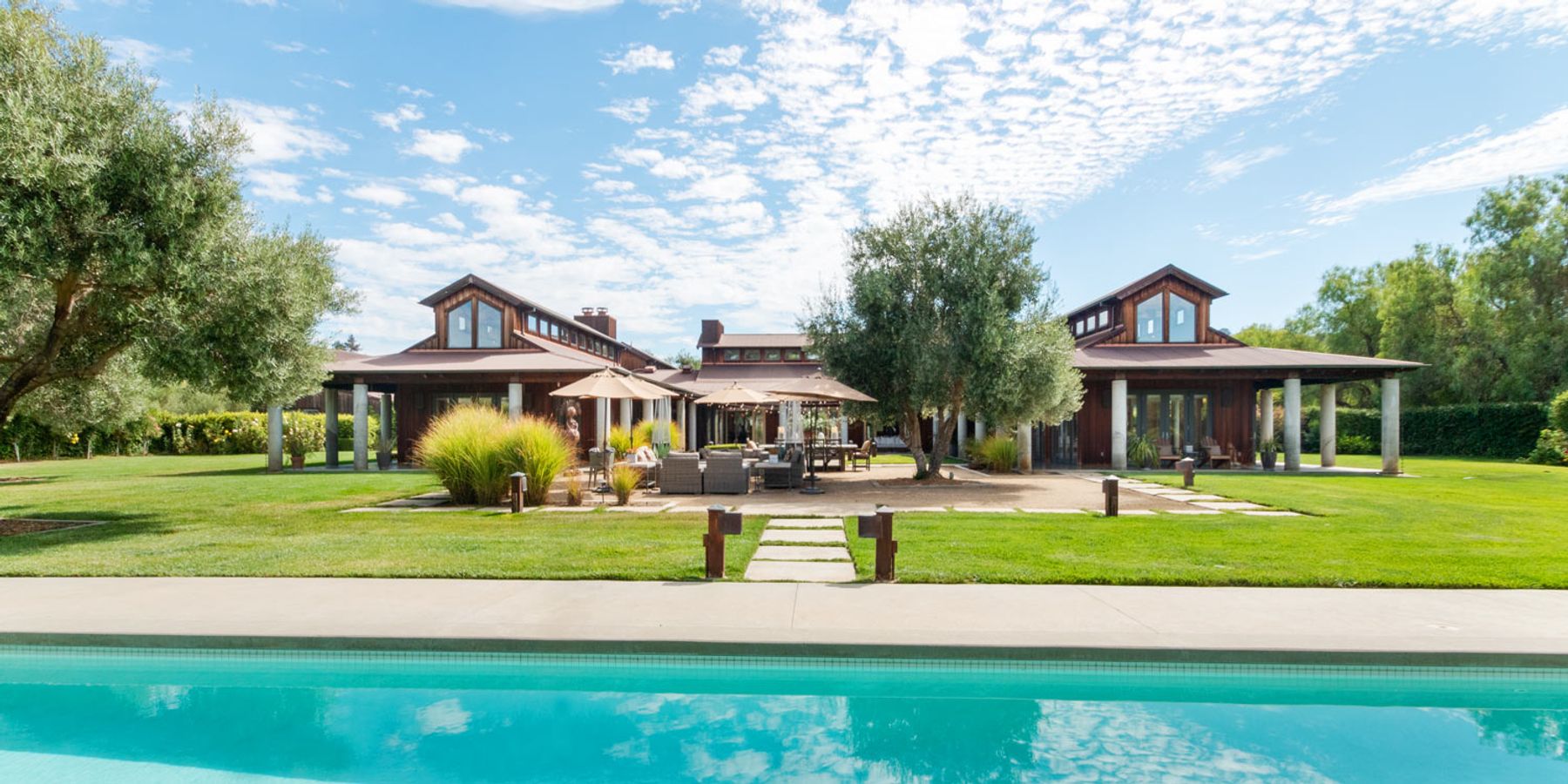
Our Napa Valley page lists one home, Olivewood Ranch. According to our listing, this gated retreat sits about six miles from Fairfield city center and 15 miles from Napa County Airport. It works across the seasons: an outdoor pool and air conditioning for summer, a sauna, fireplace and fire pit for cooler months, and vaulted wooden ceilings with skylights that keep the living spaces bright. A piano and a bar area round out the main room.
Our Northern California collection also includes Sonoma Retreat in Santa Rosa, in neighboring Sonoma County, about 14.9 miles from Charles M. Schulz–Sonoma County Airport according to its listing. It has a pool that can be heated, a hot tub for cool evenings, pickleball and basketball courts, a pool table and outdoor dining, with housekeeper service listed.
Whichever season you choose, both homes are among our villa vacation rentals that we've personally inspected, and we check each one again before you arrive. Our team can arrange transfers and provisioning, and we can help arrange tasting visits around your dates.
Frequently Asked Questions
What is the rainiest time of year in Napa Valley?
Winter is the rainiest time of year in Napa Valley. Most of the rain falls between roughly November and March, while May through October is typically dry.
When does harvest happen in Napa Valley?
Harvest generally runs through late summer and autumn. The exact timing changes from year to year with the weather and the grape variety.
Is summer too hot for a Napa Valley trip?
Summer afternoons can be hot, but mornings and evenings stay cool. We'd plan outings early and keep the hottest hours for the pool at a home like Olivewood Ranch or Sonoma Retreat.
Choosing Your Napa Valley Season
The best time to visit Napa Valley comes down to what you want from the trip: harvest energy in late summer and autumn, green hills in spring, long pool days in summer or fireside evenings in winter. The valley rewards each of them in a different way.
When you know your season, take a closer look at Olivewood Ranch on our Napa Valley page, and we'll shape the stay around your dates. When you're ready, we're here.

Our Destinations


