
When Is the Best Time to Visit Puerto Rico?
The best time to visit Puerto Rico, for most travelers, is the drier stretch from December through April, when rain is lighter and the hurricane season is over. That said, the island is warm every month of the year. The real choice is between drier months and wetter, more humid ones, and each has its own appeal.
Because temperatures barely shift through the year, Puerto Rico rewards a different kind of planning than a four-season destination. You're not choosing between warm and cold. You're choosing how much rain you're happy with, how humid you like your afternoons and how flexible your plans can be. This guide walks through each season, what it suits and the homes on our Puerto Rico destination page and beyond that fit each one.
Puerto Rico's Climate at a Glance
Puerto Rico has a warm tropical climate, cooled by steady trade winds from the east. On the coast, daytime highs typically sit in the 80s Fahrenheit for much of the year, with nights in the 70s. The difference between the coolest and warmest months is small.
Rainfall is what changes. The island has a drier half of the year and a wetter half, and rain is not spread evenly across the land. Where you stay shapes your weather almost as much as when you go.
How Geography Shapes the Weather
Puerto Rico sits in the northeastern Caribbean, with the Atlantic Ocean to the north and the Caribbean Sea to the south. A mountain range, the Cordillera Central, runs along the island's interior from east to west. That spine of hills creates sharp local differences:
The northeast catches the trade winds first. El Yunque National Forest, a tropical rainforest in the Luquillo Mountains, is one of the wettest places on the island.
The mountains are cooler than the coast, especially at night, and they see more frequent showers.
The south coast sits in the rain shadow of the central mountains, so it is noticeably drier. The southwest is home to dry forest rather than rainforest.
The north coast, including San Juan, sits between the two, with regular passing showers that rarely last long.
This is why two people visiting in the same week can describe very different weather. A rainy afternoon in the rainforest can coincide with sunshine on the southern shore.
December Through April: The Drier Months
For most travelers, this is the best time to visit Puerto Rico. Rainfall drops across much of the island, humidity eases a little and the trade winds keep afternoons comfortable. The hurricane season is over, which removes a layer of uncertainty from planning.
These months suit almost everything the island offers. Long beach days are easy, and walking the blue cobblestone streets of Old San Juan is more pleasant without the heaviest summer humidity. Hiking in El Yunque is still a damp experience, as it is year-round, but trails tend to be in better shape in the drier months.
The winter holidays have a special character here. Puerto Rico's Christmas celebrations traditionally carry on past New Year to Three Kings Day on January 6, so a December or early January visit comes with a long, festive season of music and family gatherings.
What These Months Suit
Beach-focused stays with plenty of time at the pool and on the sand
Multigenerational trips, where predictable weather makes planning simpler
Walking days in Old San Juan and its historic fortifications
Day trips into the mountains and the rainforest
May Through November: The Wetter, Warmer Months
From May, the island grows more humid and rain becomes more frequent. On the coast, much of that rain arrives as short, heavy afternoon showers that pass quickly, often leaving the rest of the day bright. Temperatures rise a little, and the air feels warmer and heavier.
Summer has real appeal. Days are long, and the island is green and lush after the rains. If you're happy with an afternoon downpour and a slower pace in the heat of the day, June, July and August can be a lovely time for a family-friendly villa stay built around the pool.
The Atlantic Hurricane Season
The Atlantic hurricane season runs from June 1 to November 30, and Puerto Rico sits within its range. Storms are not a given in any particular week, but the possibility shapes how we'd plan a trip.
If you travel during these months, a few habits help:
Keep your plans flexible, with travel insurance that covers weather disruption.
Watch the forecast in the days before you leave.
Choose a home that works in any weather, with good indoor living space, so a rainy day still feels like a holiday.
Talk to our team about timing before you commit to dates.
What These Months Suit
Travelers who want long, hot days
Families whose schedules center on the summer school break
Relaxed stays where a passing shower is part of the rhythm
Month by Month: A Quick Guide
If you prefer a simple summary, here's how we'd describe the year in Puerto Rico:
January to March: drier, warm and breezy. A comfortable window for every kind of trip.
April: still largely dry and warm, with humidity starting to build toward the end of the month.
May: the shift toward the wetter months begins, with more frequent showers.
June to August: hot, humid and green, with afternoon showers and the early part of hurricane season.
September to October: the heart of the hurricane season and among the wettest months. Flexibility matters most here.
November: rain begins to ease and the hurricane season closes on November 30.
December: drier weather returns, along with the start of the island's long holiday season.
Planning and Packing for Each Season
The weather in Puerto Rico rarely calls for heavy packing, but small choices make a difference to how comfortable you feel. Light, breathable clothing works in every month. Beyond that, the season and your plans decide the rest.
In the drier months, sun protection matters most. The trade winds can make a hot day feel milder than it is, so a wide-brimmed hat, a good sunscreen and plenty of water are worth taking seriously on the beach and in town. Evenings on the coast are warm, though a light layer helps in the mountains after dark.
In the wetter months, plan your days around the weather rather than against it. Mornings are often the brightest part of the day, which makes them a natural time for beach walks, sightseeing and drives. Afternoons suit the pool, a long lunch at home or a rest through the heaviest heat.
Whatever the season, a few items earn their place in the suitcase:
A compact rain jacket for the rainforest and the mountains
Comfortable walking shoes for the cobblestones of Old San Juan
Water shoes or sandals for rocky stretches of shoreline
A light sweater for air-conditioned interiors and cooler mountain evenings
Our concierge team can stock the kitchen before you arrive and arrange transfers from the airport, so the first day starts at the house rather than in a supermarket queue.
Choosing Where to Stay by Season
Because rainfall varies so much across the island, the right base depends partly on when you go. The drier south coast can make sense in the wetter months if you want more sunshine. The north coast puts you closer to San Juan and its history. A rainforest-side stay suits travelers who come for the green interior and don't mind the showers.
Whatever the season, a private home gives you something a hotel can't. A puerto rico luxury rental means your own outdoor space for the dry months and your own indoor space for the wet ones, without sharing either with strangers. For families and groups, a vacation villa in Puerto Rico also means one base for everyone, with a kitchen and dining space that make long, unhurried meals easy.
We've been arranging luxury holiday villas since 1979, and every home in our collection is personally inspected before it joins, with a pre-arrival check on every stay.
Villa Palmas: Our Home on the Island
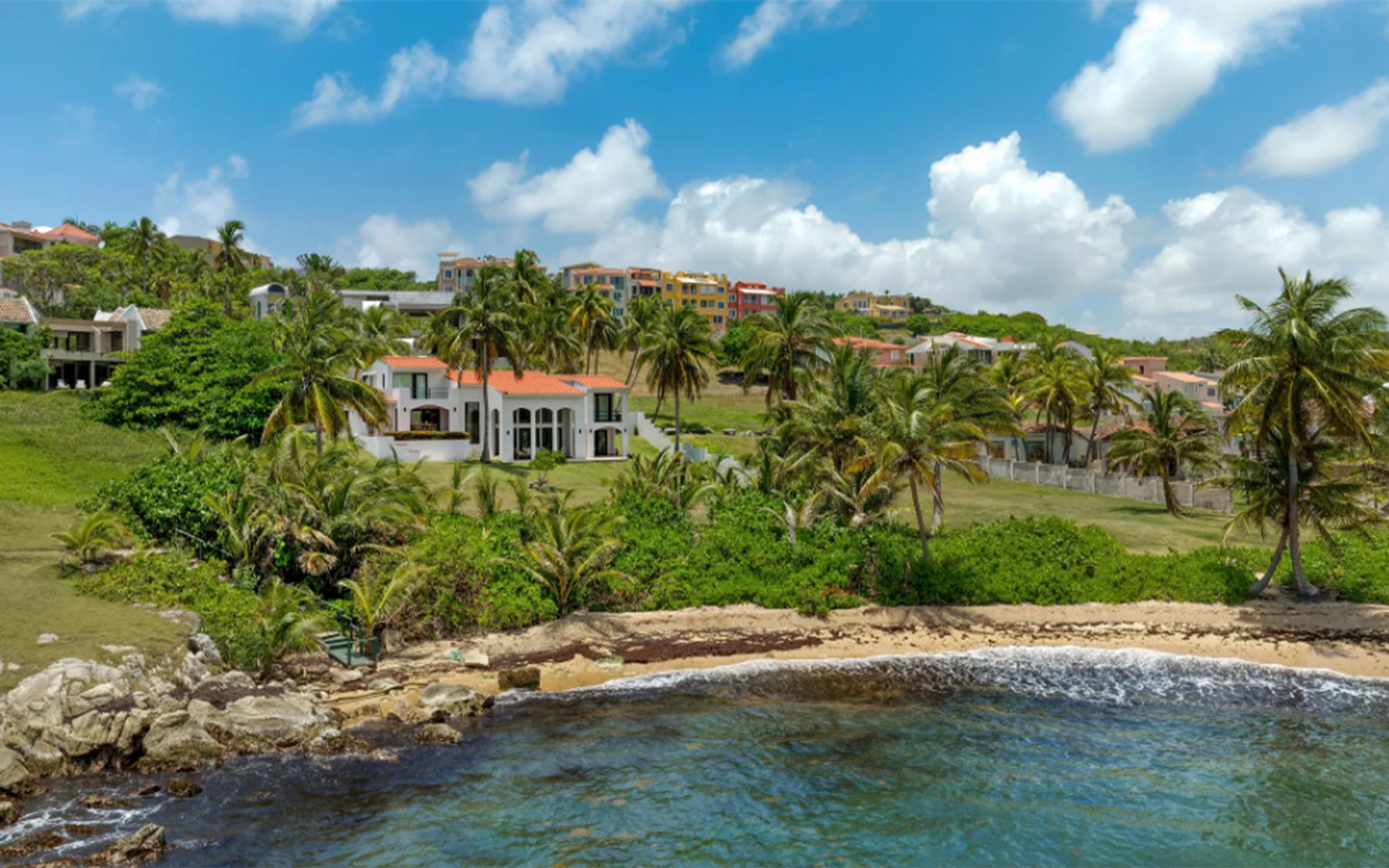
Our Puerto Rico page lists one home, and it suits travel in any season. Villa Palmas sits in the gated community of Palmas del Mar in Humacao, on the island's eastern coast, with a beachfront setting and ocean views from rooms with balconies and terraces.
The home has a modern design with a fully equipped kitchen, outdoor dining, a barbecue and a dedicated workspace for anyone who needs to stay connected. Guests have access to a community pool. Listed services include concierge and housekeeping with a midweek clean.
According to our listing, Villa Palmas is 63.9 kilometers from Luis Muñoz Marín International Airport, 13.9 kilometers from the Humacao Nature Preserve and 60.4 kilometers from El Yunque National Forest. That makes it a practical base for a beach-focused stay with day trips into the rainforest and to San Juan.
In the drier months, life at Villa Palmas centers on the beach, the terraces and long evenings outdoors. In the wetter months, the air conditioning, the ocean-view rooms and the covered spaces keep the house comfortable through an afternoon shower.
Pairing Puerto Rico With St. John
Puerto Rico pairs well with the U.S. Virgin Islands to the east, and St. John makes a natural match. The islands share the same warm tropical climate, a similar pattern of drier winters and wetter, more humid summers, and the same Atlantic hurricane season. Much of St. John is protected as Virgin Islands National Park, with forested hills running down to the bays. Our U.S. Virgin Islands destination page lists homes on St. John that suit any season.
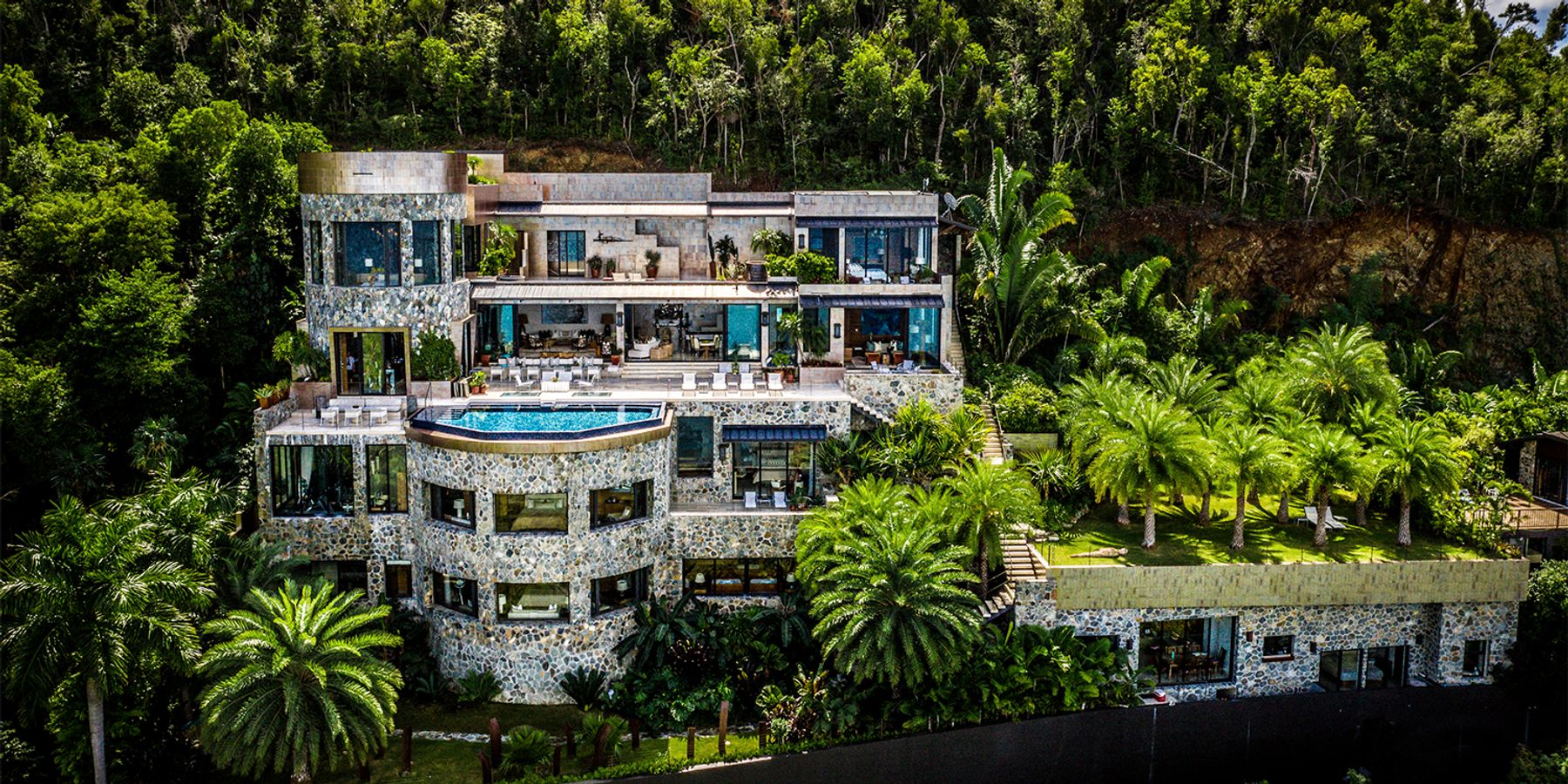
Among our featured homes, Cloudline is a hillside home on St. John overlooking Denis Bay, with ocean views through walls of sliding glass doors. According to our listing, it's 1.1 miles from Hawksnest Beach, 2.7 miles from Cruz Bay and 2.9 miles from Virgin Islands National Park. It has a heated pool, a hot tub, hammocks, a fitness room, a home cinema and a library, and listed services include concierge and daily housekeeping. In the wetter months, the cinema and the covered living spaces come into their own.
Next, Villa Panache sits above Rendezvous Bay on St. John, set in tropical gardens with views over the Caribbean. Our listing places it 2.4 miles from the Saint John Ferry Terminal and 16.8 miles from Cyril E. King Airport on St. Thomas, with a boat transfer required between the islands. Outside, there's a heated pool, an outdoor kitchen, a bar and an outdoor shower, and the home has a fully equipped gym. Listed services include concierge and housekeeping with a midweek clean.
Both work well alongside a stay at Villa Palmas. Cloudline suits travelers who want a hillside retreat with plenty to do indoors on a rainy afternoon, while Villa Panache centers on outdoor living around the pool and the outdoor kitchen in the drier months. Our St. John destination page and our homes across the United States offer more options if you'd like to extend the trip.
Frequently Asked Questions
What is the best month to visit Puerto Rico?
For dry, warm weather, the months from January through March are a strong choice. Rain is lighter across much of the island and the hurricane season is over. That said, Puerto Rico is warm all year, so the right month also depends on your schedule.
Is it worth visiting Puerto Rico during hurricane season?
It can be, as long as your plans stay flexible. The Atlantic hurricane season runs from June 1 to November 30. Travel insurance and a close eye on the forecast make sense for those months.
Does it rain every day in Puerto Rico?
Not usually. In the wetter months, rain on the coast often comes as short afternoon showers that clear quickly. The rainforest in the northeast sees rain far more often than the drier south coast.
What is the weather like in the mountains?
The interior mountains are cooler than the coast, particularly at night, and they see more frequent showers. It's worth packing a light layer and rain jacket for any day trip into the hills or the rainforest.
The Best Time to Visit Puerto Rico Is the One That Fits Your Plans
The best time to visit Puerto Rico, for most travelers, falls between December and April, when the weather is drier and the hurricane season is over. Summer brings heat and humidity for those who don't mind an afternoon shower, while September and October call for the most flexibility.
When you're ready to plan, start with our Puerto Rico destination page and Villa Palmas. Tell us when you'd like to travel and how you like to spend your days, and we're here to help you find the right home for the season.

Our Destinations


