
Working Remotely from a St. Barths Villa
Working remotely from a beautiful place has become a familiar idea, but doing it well from an island as celebrated as St Barths takes more planning than simply packing a laptop and hoping for the best. The gap between a remote work stay that actually functions and one that quietly falls apart usually comes down to a handful of practical decisions made before departure: where connectivity is genuinely reliable, how a property's layout supports focused hours, and whether the pace of a day can flex around both deadlines and the island's famously unhurried rhythm. Travelers who get these details right find that an extended stay here can outperform almost any office for concentration, while those who don't often end up fighting their surroundings instead of using them.
This is where the choice of accommodation stops being a minor detail and starts shaping the entire experience. A villa, rather than a hotel room, gives a remote worker the physical separation, the quiet, and the flexibility that a genuinely productive stay depends on. Understanding why — and how to structure a workday around it — makes the difference between a trip that blends work and life gracefully and one that never quite settles into either.
Why St Barths Suits an Extended Remote Stay
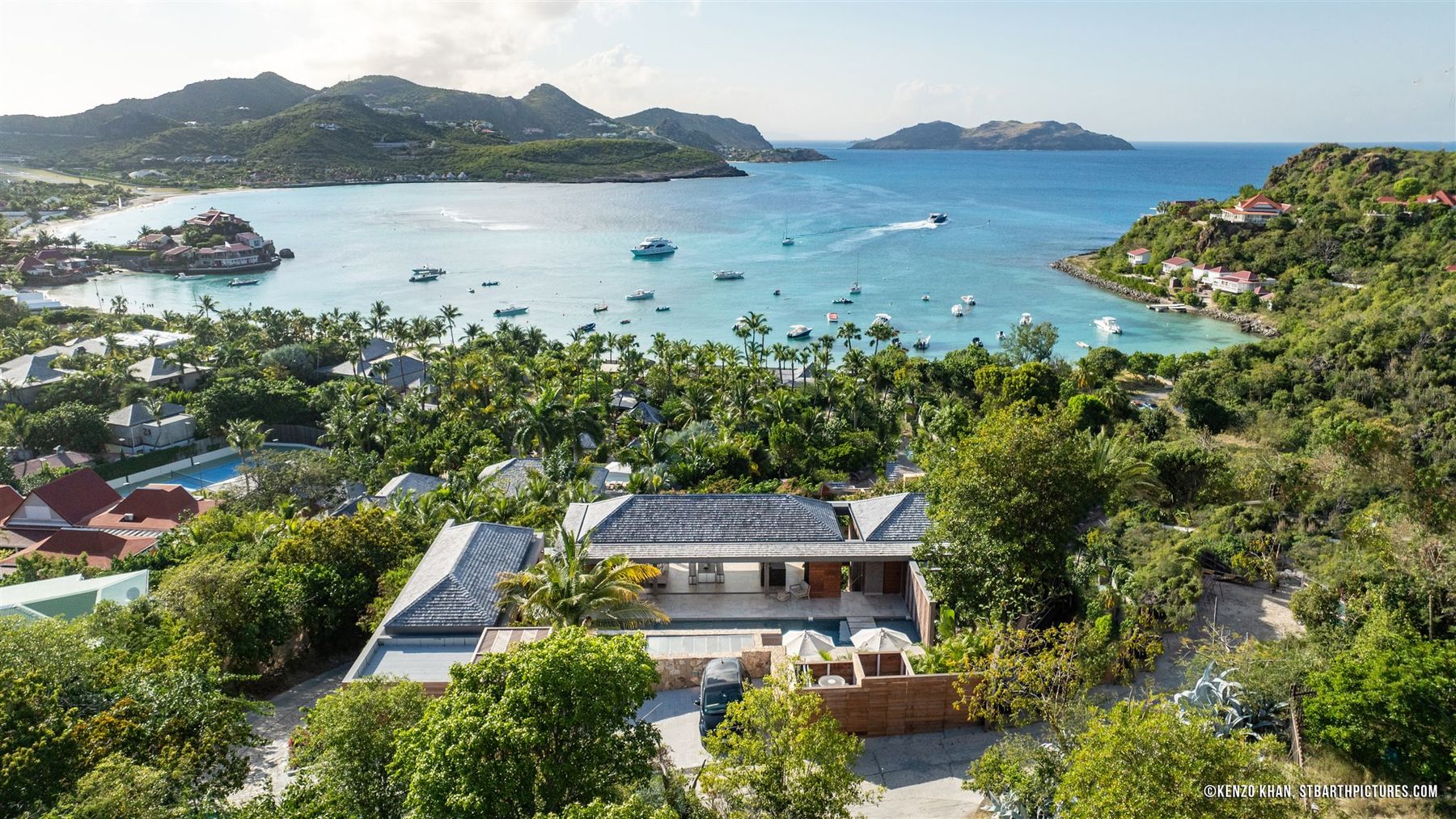
Part of the appeal is simply geography. The island is small enough that nothing is ever more than a short drive away, which means a remote worker doesn't lose hours commuting between a workspace and everything else a stay might involve — errands, meals, a walk on the beach between calls. That compactness turns what would elsewhere be a full day of logistics into something that fits comfortably around a working schedule.
The other part is cultural. Saint Barthélemy has never built its identity around large-scale resorts or crowded amenities. Its low-rise building tradition and emphasis on privacy mean that a stay here tends to feel calm by default, without the constant hum of activity that can make focus difficult in busier destinations. For a traveler trying to hold onto real working hours during an extended stay, that baseline calm is worth more than almost any amenity list.
An extended stay also changes the calculus in a way a short vacation doesn't. Anyone spending two, three, or more weeks on the island has to think about sustaining a working rhythm day after day, not just surviving a single hectic week. That's a different planning problem, and it rewards travelers who choose their base — and their daily structure — deliberately rather than assuming any accommodation will do.
Reliable Connectivity in a Villa Setting
Connectivity is the first practical question anyone combining remote work with island life needs to answer, and it deserves more thought than simply assuming a villa will have good WiFi because it's described as luxurious. Bandwidth on a Caribbean island depends on the specific property's setup, its distance from the island's main connectivity infrastructure, and whether the villa has invested in a dedicated line rather than relying on a shared or older connection.
Before booking, it's worth asking directly about the internet setup: whether the property has fiber or a comparable high-speed connection, whether that connection is dedicated to the villa or shared with neighboring properties, and whether there's a backup option, such as a secondary provider or a mobile hotspot, in case the primary connection has an outage. A concierge familiar with the island's properties can usually answer these questions specifically rather than in generalities, and it's a conversation worth having well before arrival if video calls or large file transfers are part of the daily routine.
It also helps to think about where within the villa the connection is strongest. A property with WiFi extended evenly across its outdoor terraces as well as its interior rooms gives a remote worker far more flexibility than one where the signal is reliable only near the router. Testing this on arrival, rather than assuming it, avoids the frustration of discovering a favorite work spot has a weak signal partway through an important call.
Finally, it's worth having a simple backup plan for connectivity that doesn't depend on the villa at all — a local data plan or an international roaming package on a phone, kept active as insurance rather than a primary solution. Most remote work stays never need it, but the peace of mind of knowing a call can go ahead even during a brief outage is worth the small extra step of arranging it in advance.
Designing a Workday Around a Villa's Quiet Spaces
Once connectivity is settled, the next question is where within the property to actually work. This is where a villa's layout starts to matter enormously, and it's worth walking a property mentally — or asking a concierge to describe it in detail — before deciding it's the right fit for an extended working stay.
The best setups tend to offer more than one workspace option, so the choice of where to sit can shift with the time of day and the type of work at hand. A shaded terrace works well for a morning of reading or email that doesn't require total silence, while a quieter interior room, away from a pool deck or shared living space, suits a call or a task that needs full concentration. Villas designed with distinct wings or multiple sitting areas make this kind of rotation effortless; those built around a single great room make it much harder to find quiet without retreating to a bedroom.
Natural light and a view worth glancing up at occasionally also matter more than they might seem to on paper. A workspace positioned to catch the morning light, with a garden or ocean view within eyeshot, makes long stretches of focused work feel considerably less like being chained to a desk. It's a small detail, but over the course of a multi-week stay, it accumulates into a meaningfully better working experience than a windowless corner ever could.
Households traveling together — a partner also working remotely, or family members present during the day — benefit enormously from a villa with enough separation to let more than one person hold a call at the same time without disturbing each other. This is one of the clearest ways a villa's scale translates directly into working productivity, since a property with multiple quiet corners solves a problem that a single hotel room simply cannot.
Structuring Focus Around the Island's Slower Pace
St. Barths runs on a noticeably unhurried rhythm, and travelers who fight that rhythm — trying to work a full eight-hour day exactly as they would at home — often end up more frustrated than productive. The better approach treats the island's pace as something to work with rather than against, structuring the day around a few genuinely focused hours rather than spreading work thinly across every waking moment.
This usually means identifying the hours when concentration comes easiest — often earlier in the day, before the island's warmth and general sense of ease start to pull attention elsewhere — and protecting those hours deliberately for the tasks that need real focus. Everything else, from routine email to lighter administrative work, can flex around the rest of the day far more comfortably.
Morning Focus Blocks
Mornings tend to be the most reliable window for deep work during an island stay. The air is cooler, the villa is quiet, and there's a natural discipline to starting the day with focused hours before anything else competes for attention. Many remote workers find that scheduling calls and demanding tasks for a defined morning block — say, three to four hours — and treating everything after as more flexible produces far better results than trying to stay "on" all day.
This also aligns well with time zone considerations for anyone working with colleagues or clients elsewhere. Saint Barthélemy sits on Atlantic Standard Time, which overlaps comfortably with much of the U.S. East Coast for a solid morning stretch — useful information when structuring a working day intended to overlap with a home office's core hours.
Afternoon and Evening Transitions
Once the focused morning block winds down, the afternoon is where the island's slower pace can genuinely take over — a swim, lunch on a shaded terrace, or simply stepping away from a screen entirely. Building this transition deliberately into the day, rather than letting work quietly bleed into the afternoon by default, is what actually delivers the balance a remote work stay is meant to offer.
Evenings, in turn, become genuinely free rather than another stretch of half-hearted email-checking. A villa's quiet spaces make this transition easier than it sounds: closing a laptop in one part of the property and moving to a terrace or pool deck for the evening creates a physical separation between work and rest that a single hotel room, where the desk and the bed share the same four walls, rarely offers as cleanly.
Why a Villa Outperforms a Hotel Room
The comparison between a villa and a hotel room becomes especially clear once remote work enters the picture. A hotel room, however well-appointed, is a single space that has to serve as bedroom, office, and living room all at once. That compression makes it very difficult to create the kind of psychological separation between work and rest that sustains focus over an extended stay — there's nowhere to "leave" the workday behind when the laptop sits four feet from the bed.
A villa solves this by design. Multiple rooms, terraces, and outdoor living spaces mean a workday can happen in one part of the property and be genuinely left behind in another. This matters enormously over a multi-week stay, where the difference between a sustainable rhythm and a slow burnout often comes down to whether work and rest have their own distinct physical spaces.
Connectivity control is another factor. A villa typically offers a dedicated connection that isn't shared with dozens of other hotel guests streaming video or holding their own calls simultaneously, which matters considerably for anyone relying on a stable connection for video meetings throughout the day. A hotel's shared bandwidth, by contrast, can fluctuate unpredictably depending on how busy the property is at any given moment.
Privacy also plays a role that's easy to underestimate until it's missing. A hotel room sits within a building full of other guests and staff moving through shared corridors, which can make it harder to hold a confidential call or simply concentrate without background noise. A villa's private grounds remove that variable entirely, offering the kind of quiet that focused work genuinely requires.
Featured Villas for a Remote Work Stay
Among Lacure's collection on the island, two properties illustrate how differently a villa can support an extended remote work stay depending on its scale and setting. A household planning several weeks on the island, potentially with more than one person working during the day, will find a natural fit in Unik, a ten-bedroom villa in St. Jean with ocean views and capacity for twenty guests. Its scale allows for genuine separation between workspaces — one person on a call in a quiet interior room while another works from a shaded terrace — without anyone feeling like they're competing for the same corner of the property all day.
For a stay built around a calmer, more contained rhythm, Maison De La Mer, set directly on the sand in Flamands, offers a different advantage. Its beachfront position on the island's quieter northwest coast means the transition from a focused morning of work to an afternoon swim happens with essentially no travel time at all — a detail that matters more than it might seem once several weeks of a working stay are underway. The quieter setting in Flamands, compared to the more social energy near St. Jean, also suits travelers who want their downtime to feel genuinely restorative rather than another stimulating environment to manage.
Both properties demonstrate that supporting remote work isn't a single formula. A large, multi-wing property like Unik solves the problem through scale and separation, while a more intimate beachfront setting like Maison De La Mer solves it through simplicity and proximity to the water. The right choice depends on the size of the traveling party and how much structure versus spontaneity a household wants from its days.
Planning an Extended Stay
An extended remote work stay benefits from more upfront planning than a typical vacation, since the goal is sustaining a working rhythm over weeks rather than simply enjoying a week off. Confirming connectivity details with a concierge ahead of time, as covered earlier, is the first step, but it's worth going further and discussing the household's specific working needs directly — how many people will need to be online simultaneously, whether any calls require particular quiet at specific times of day, and whether a dedicated desk setup, rather than just a table on a terrace, would be useful for the stay's duration.
It's also worth thinking about the stay's shape over time rather than treating every day identically. Many remote workers traveling for an extended stretch find it helpful to front-load a few intensive working days early in the trip, before island life fully takes hold, and gradually shift toward a more relaxed balance as the stay progresses. Others prefer the opposite — easing in gently before settling into a working rhythm once they've adjusted to the time change and pace. Neither approach is wrong, but deciding in advance, rather than figuring it out day by day, tends to produce a smoother stay.
Staffing support matters more during a working stay than it might during a typical vacation. A private chef handling meals removes a genuine daily task from a schedule that already has to accommodate focused work hours, and housekeeping that operates around a household's working schedule — rather than requiring guests to vacate the property during business hours — keeps the day running smoothly rather than becoming another thing to manage.
Finally, it's worth considering the time of year. Saint Barthélemy's dry season, roughly December through April, brings the most reliable weather and the calmest atmosphere for extended stays, though it's also the island's busiest stretch, so a property suited to a working stay, such as Unik, should be booked well in advance of that window.
Is Saint Barthélemy Good for Remote Work?
For travelers who plan carefully around connectivity and workspace, yes — the island's calm pace, compact geography, and villa stock built for genuine separation between work and rest make it a strong fit for an extended remote work stay. The caveat is that it rewards preparation. A traveler who simply shows up expecting any property to deliver reliable bandwidth and a quiet corner may be disappointed; one who confirms these details in advance, and structures the day around a few focused hours rather than an all-day slog, tends to find the island delivers on both productivity and genuine rest in equal measure.
The island's time zone also helps more than travelers sometimes expect. Its overlap with U.S. East Coast business hours for a meaningful stretch of the morning means a remote worker rarely has to choose between island life and staying reachable for colleagues or clients back home — the two can coexist within a well-structured day. A quieter base like Maison De La Mer makes that overlap easier to protect, since there's little competing noise to pull focus away from an early call.
The Lasting Appeal of Working From a Villa
What makes St. Barts such a compelling base for an extended remote work stay isn't any single amenity — it's the combination of a genuinely calm daily rhythm, an island small enough to move through effortlessly, and villas built with the kind of separation between spaces that a working stay quietly depends on. A hotel room can offer a view and a comfortable bed, but it can't offer the physical distance between a desk and a terrace that makes a long stay sustainable rather than exhausting.
Travelers weighing where to base an extended working trip will find that properties like Unik and Maison De La Mer each answer that need differently — one through scale built for a larger household balancing several working schedules at once, the other through an unhurried beachfront setting that makes the transition from focused hours to genuine rest almost automatic. Either way, the appeal of combining serious, focused work with a setting this restorative remains one of the more compelling reasons travelers keep returning to Saint Barthélemy long after their laptops have closed for the day.

Our Destinations