
Is the French Side of St. Martin Worth Visiting? A Luxury Traveler's Answer
Yes. The French side of St. Martin is worth visiting if you want French Caribbean food culture, quiet residential bays and a private villa with the sea in view, all on an island that is easy to reach. It's the calmer, more residential half of the island, and for many of our guests it's the half they return to.
Officially it's Saint-Martin, a French overseas collectivity, and the villas we place there are listed under Saint Martin. It shares the island with Dutch Sint Maarten, but it has a rhythm all of its own.
Where Is St. Martin, and Which Side Is French?
St. Martin sits in the northeastern Caribbean, among the Leeward Islands, with Anguilla just to the north and St. Barths a short sail to the southeast. The island has been divided between France and the Netherlands since the 17th century. The French side covers the larger, northern part; the Dutch side holds the south.
There's no formal border to cross between the two. You can have breakfast in Marigot, the French capital, and lunch on the Dutch side without showing a passport, which is part of what makes the island so easy to explore. French is the official language in the north, the euro is the currency, and road signs, bakeries and menus all carry that accent.
Most international flights land at Princess Juliana International Airport on the Dutch side. The French side has its own smaller airport at Grand Case, used mainly for regional hops. Once you're on the island of St. Martin, the drive north takes you over green hills into a quieter landscape.
What Makes the French Side Different
The French side feels residential rather than commercial. Cruise traffic, casinos and duty-free shopping concentrate in the south, while the north is shaped by villas, small bays and village life. Three qualities stand out:
Dining culture. Grand Case is widely known as the island's culinary capital, a small seaside village where French and Creole cooking share one street.
Beaches with distinct personalities. Wild Baie Rouge, long and quiet Baie Longue, sheltered Friar's Bay and social Orient Bay each suit a different kind of day.
A market town at its heart. Marigot has a waterfront market, a marina and Fort Louis on the hill above, with one of the widest views on the island.
The coastline matters as much as the towns. The Atlantic-facing east coast brings trade winds, offshore islets and the kitesurfing at Baie de l'Embouchure. The west and north coasts are calmer, with sunset views and coves for an easy swim.
Which Part of the French Side Suits You?
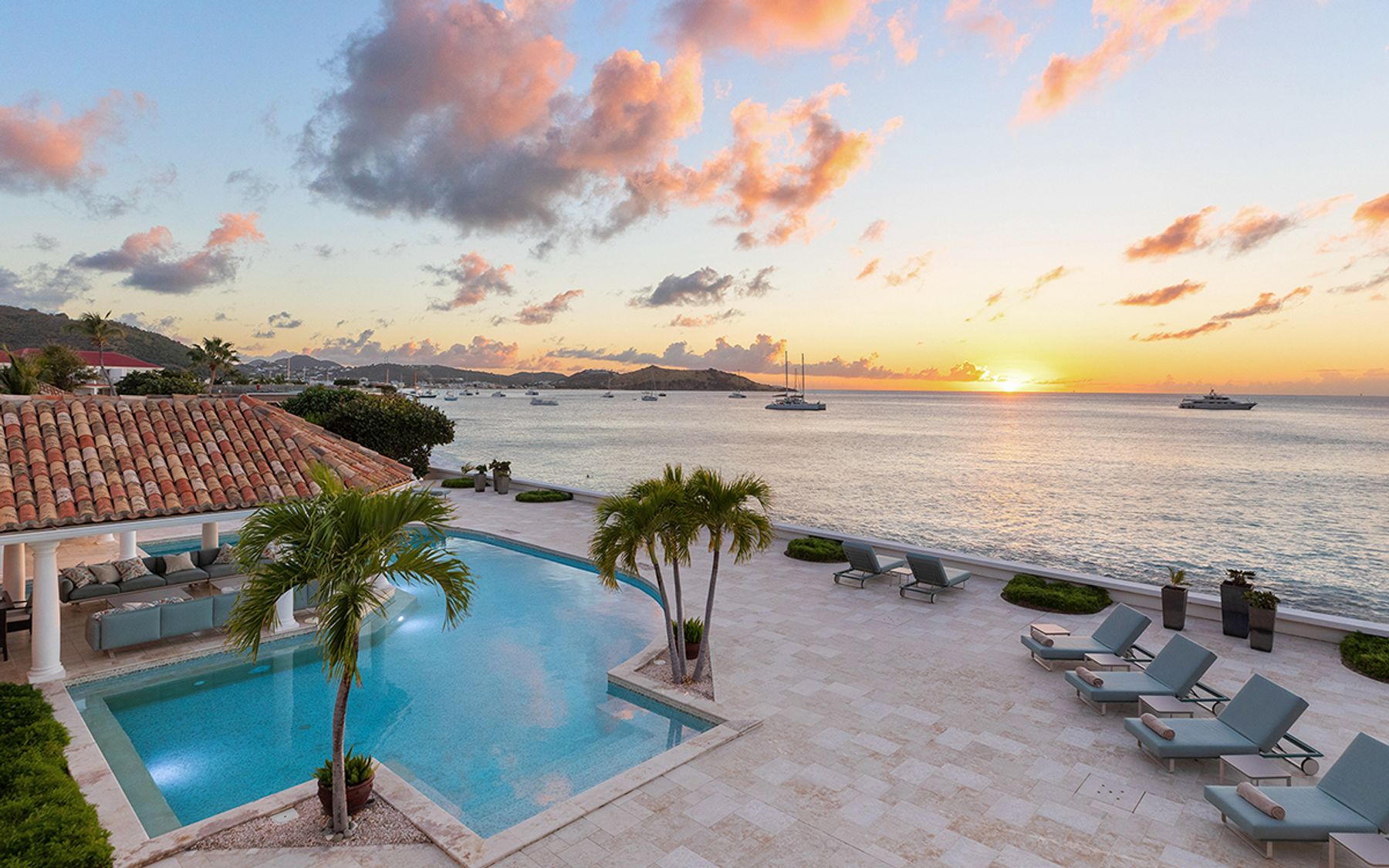
The right base depends on how you want your days to feel, and the distances are short enough that you'll explore the rest either way.
Terres Basses
Terres Basses, the low western peninsula, is the island's private estate district. Large homes sit along quiet roads between Baie Rouge, Baie Longue and Plum Bay, and the Simpson Bay Lagoon lies on the inland side. It suits couples, honeymooners and anyone who puts privacy first.
Orient Bay
Orient Bay is the social side of the French coast: a long, bright bay on the Atlantic, with beach clubs, watersports and islets offshore. First-time visitors and active families tend to like the energy here.
Grand Case, Anse Marcel and Cul de Sac
Along the north, Grand Case is the place for long dinners and an evening stroll. Beyond it, Anse Marcel is a deeply sheltered cove behind green headlands, and Cul de Sac looks across shallow water to Ilet Pinel, the small offshore island guests reach by ferry, kayak or private boat.
When Is the Best Time to Visit?
December through April is the most reliable window, with drier weather, steady trade winds and comfortable evenings. It's also the busiest season, so the best saint martin villas for rent around the holidays are often reserved many months ahead.
May and June are a quieter sweet spot, still warm and usually settled, with more villa choice. The Atlantic hurricane season runs from June 1 to November 30, with the highest risk usually from August through October. Plenty of guests still travel then, but we'd always suggest flexible plans and travel insurance that clearly covers named storms.
Who the French Side Suits Best
The French side suits travelers who measure luxury in space, food and calm rather than nightlife. Couples love the clifftop estates and sunset dinners. Families do well in family-friendly villas with pools and gardens, close to calmer beaches. Multigenerational groups can spread out in larger homes and still meet for meals on one terrace.
If your ideal week revolves around casinos and late nights, the Dutch side is livelier. Many guests split the difference: they stay in the north and drive south for an evening when the mood takes them.
Villas We Suggest on the French Side
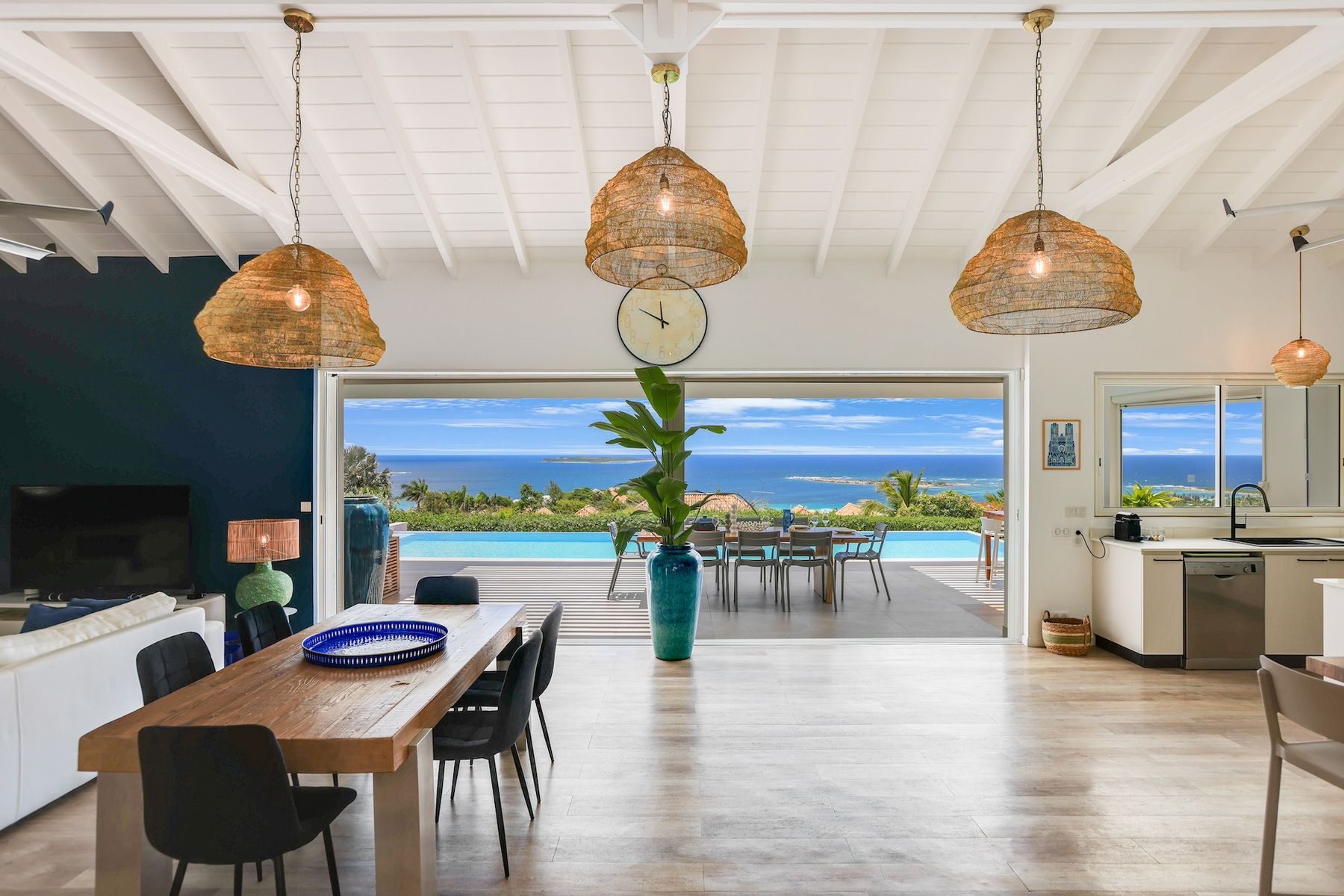
Our homes in Saint Martin cover the full range of the French side, from luxury villas on the beach to hilltop houses with long sea views. Three show that range well.
For a couple, few homes are as romantic as Les Palmiers, set directly on Baie Rouge Beach in a gated community in Terres Basses. A private pool trimmed in mosaic glass looks over the sea, and sea turtles are known to nest along this stretch, so a night walk on the sand can come with a rare sighting.
On the east coast, Villa Dulce sits on Hope Hill above Orient Bay, with an infinity pool facing the sea and a terrace made for outdoor dinners. According to our listing, Orient Beach is 1.7 kilometers away, close enough for daily beach time while the house stays quiet.
Design lovers should look at Jasper, a hillside home in Terres Basses designed by the architect Philip Johnson in the 1970s. Its veranda frames the Simpson Bay Lagoon, and a walled garden holds the pool and a covered dining terrace.
How We Plan a Stay on the French Side
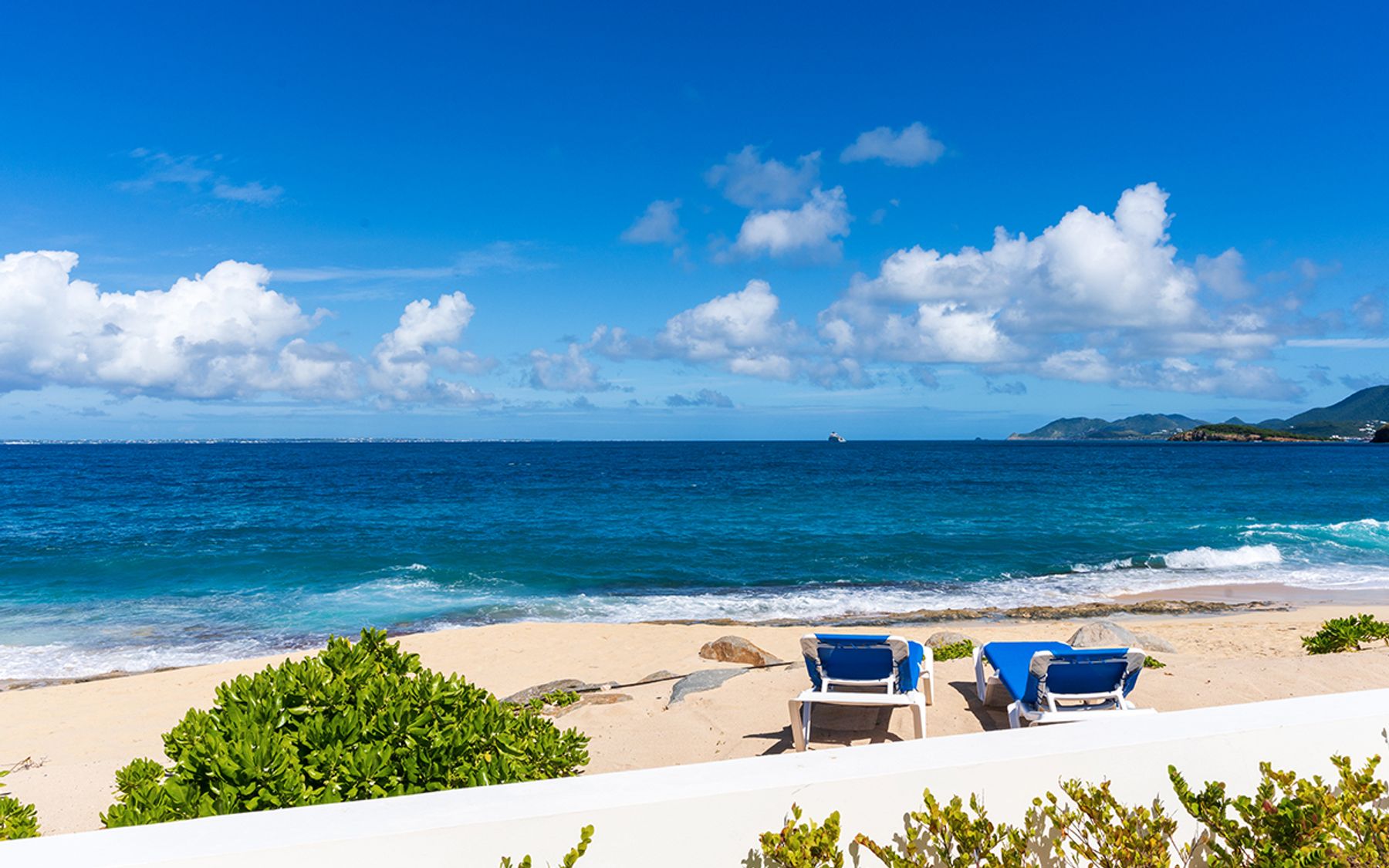
The best trips here match the villa to the coast you'll use most. Beach lovers who want the sand at the door should look at Terres Basses, while guests who want restaurants and watersports close by often prefer Orient Bay or the hills near Grand Case.
Every home in our collection is personally inspected before it joins, and each stay is checked again before you arrive. Our concierge team can arrange airport transfers, a chef who shops at the Marigot market, a day sail to Ilet Pinel or a crossing to St. Barths, so the logistics are settled before you land.
Frequently Asked Questions
How do you get to the French side of St. Martin?
Most guests fly into Princess Juliana International Airport on the Dutch side and drive north to their villa. There is no border control between the two sides. Some regional flights also land at the smaller airport at Grand Case, on the French side itself.
Do you need to speak French on the French side?
No. French is the official language, but English is widely spoken in villas, shops and restaurants. A few words of French are always appreciated, especially at the market in Marigot.
Is the French side or the Dutch side better for a villa stay?
For privacy and quiet, most of our guests prefer the French side, with estate areas like Terres Basses and calm bays along the north coast. The Dutch side suits travelers who want nightlife and quicker airport access. Because there's no border to cross, it's easy to enjoy both from one villa.
The Verdict
The French side of St. Martin is worth visiting for anyone who wants a Caribbean week built around good food, private space and a different bay for every mood. It's easy to reach, simple to explore and refined without being formal.
When you're ready, our luxury villas for rent in Saint Martin are the place to start, whether you picture yourself on the sand at Les Palmiers or on a hill above Orient Bay. We're here whenever you'd like to talk it through.

Our Destinations


