
Hamptons Villas Built Around Wellness and Quiet Mornings
There is a particular kind of luxury that has nothing to do with volume. It is the quiet click of a espresso cup set down on a stone counter, the first light crossing a lawn before anyone else is awake, the sense that an entire day can unfold without a single obligation attached to it. For travelers drawn to wellness-focused Hamptons villas, this is the real draw of the East End: not the parties or the crowded beach clubs that dominate so much of the region's reputation, but the ability to step away from all of it and reset.
The Hamptons has long carried a dual identity. On one side sits the social calendar — the galas, the pop-up restaurants, the see-and-be-seen energy that peaks each July and August. On the other is something quieter and, for many longtime visitors, far more valuable: a landscape of dune grass, potato fields turned vineyard, and shingled architecture that seems built for stillness. A villa stay lets a traveler choose which version of the Hamptons they experience, and increasingly, sophisticated travelers are choosing the second.
Why The Hamptons Rewards a Slower Kind of Luxury
Part of what makes The Hamptons so well suited to a wellness-oriented stay is geography. Unlike a dense resort town where every amenity is stacked within a few blocks, this stretch of Long Island spreads out. Villages are separated by open farmland, tidal marsh, and quiet lanes lined with old-growth trees. That spaciousness has a psychological effect before a guest even unpacks. There is room to breathe, room to walk, room for a morning to feel unhurried rather than scheduled.
The light plays a role too. Because the region sits at the edge of the Atlantic, mornings arrive with a particular clarity — a soft, silvery quality that photographers and painters have chased here for more than a century. Long before it became a summer destination for the wealthy, this part of Long Island was known as an artists' colony, prized precisely for that light and for the calm it seemed to encourage. That heritage still shapes the character of the place. Even now, with its reputation for exclusivity, the region retains pockets that feel closer to a retreat than a resort.
A villa stay leans into that character rather than working against it. Instead of a hotel lobby full of activity, a guest wakes inside a private home with its own rhythm. Instead of a poolside scene curated for visibility, there is a quiet terrace, a private lawn, or a soaking tub with a view of nothing but trees. For travelers who define luxury as control over their own time, that distinction matters enormously.
The Case for a Quiet Morning
Wellness travel has moved well past spa menus and juice bars. What today's discerning traveler actually wants is time — unstructured, private, restorative time, ideally at the start of the day before obligations creep in. A quiet morning has become its own kind of luxury good, scarce precisely because so few environments are built to protect it.
Consider what a slow morning actually requires. It needs a space that feels calm rather than transactional — no check-out clock, no dining room reservation, no other guests moving through a shared hallway. It needs natural light, ideally with a view that encourages a guest to simply sit rather than reach for a phone. And it needs enough privacy that a stretch, a swim, or a few minutes of silence doesn't feel like it's on display.
A private villa checks each of these boxes almost by design. Mornings can begin exactly when a guest chooses, structured around a pool rather than a schedule, a private garden rather than a hotel breakfast room, a hushed kitchen rather than a crowded café. That freedom, more than any single amenity, is what separates a restorative stay from a merely comfortable one.
Villas Designed for Stillness, Space, and Recovery
Not every property lends itself equally well to this kind of trip. A wellness-minded stay benefits from certain physical qualities: enough bedrooms that a group doesn't feel cramped, enough bathrooms that mornings don't turn into a queue, and enough outdoor space that quiet time never has to compete with anyone else's plans. Two properties in the Lacure collection illustrate how differently that can be achieved, depending on the size and composition of the traveling group.
Native Light: An Intimate Retreat Built for Stillness
For a smaller group prioritizing calm over capacity, a property like Native Light offers a compelling model. With eight bedrooms and ten bathrooms set against a maximum occupancy of just six guests, the ratio of space to people is unusually generous. That imbalance, so to speak, is exactly what makes a wellness-focused stay work. Nobody has to negotiate for a bathroom in the morning. Nobody has to time their swim around someone else's plans. Every guest effectively has an oversized private wing to retreat into, which turns the entire property into a kind of buffer against the outside world.
That abundance of space also changes the emotional texture of a stay. A guest can move from bedroom to a quiet reading corner to an outdoor seating area without ever crossing paths with another member of the group unless they choose to. For a family or small circle of friends who each want their own version of a slow morning — one person doing quiet stretches, another simply reading with coffee, another taking a long, unhurried shower — that kind of layout removes the friction that so often turns a group trip into a series of small compromises.
Restorative Rhythms and the Architecture of a Slow Day
What distinguishes a wellness-oriented villa stay from an ordinary vacation is the way the day is structured, or rather, deliberately left unstructured. Rather than building a schedule around meals, tours, or nightlife, the day can be built around the body's own rhythm: waking with the light, moving gently before breakfast, resting in the heat of early afternoon, and closing the day slowly rather than rushing toward an evening plan.
Private outdoor space is central to this. A pool becomes less about recreation and more about ritual — a way to begin or end the day with a few unhurried laps or a quiet float, away from the noise of a public beach club. A garden or terrace becomes a place for gentle movement, whether that's a yoga sequence brought along by a guest or simply a slow walk with coffee in hand. None of this requires elaborate programming. It requires space, privacy, and time, three things a well-designed villa provides in abundance.
This approach also suits the natural setting of the region. Rather than treating the outdoors as a backdrop for entertaining, a wellness-focused stay treats it as the main event. A quiet morning spent watching mist lift off a lawn, or an afternoon spent reading in dappled shade, can feel more genuinely restorative than any scheduled treatment.
Artistic Acre: Space to Gather Without Losing the Quiet
Larger groups face a different challenge. More people naturally means more potential for noise, more competing preferences, and more risk that quiet time gets crowded out by group activity. A property like Artistic Acre solves for this with scale rather than restriction — seven bedrooms and seven bathrooms, with room for up to sixteen guests, which allows a multi-generational family or a larger circle of friends to gather together without sacrificing the ability to peel off for solitude when they need it.
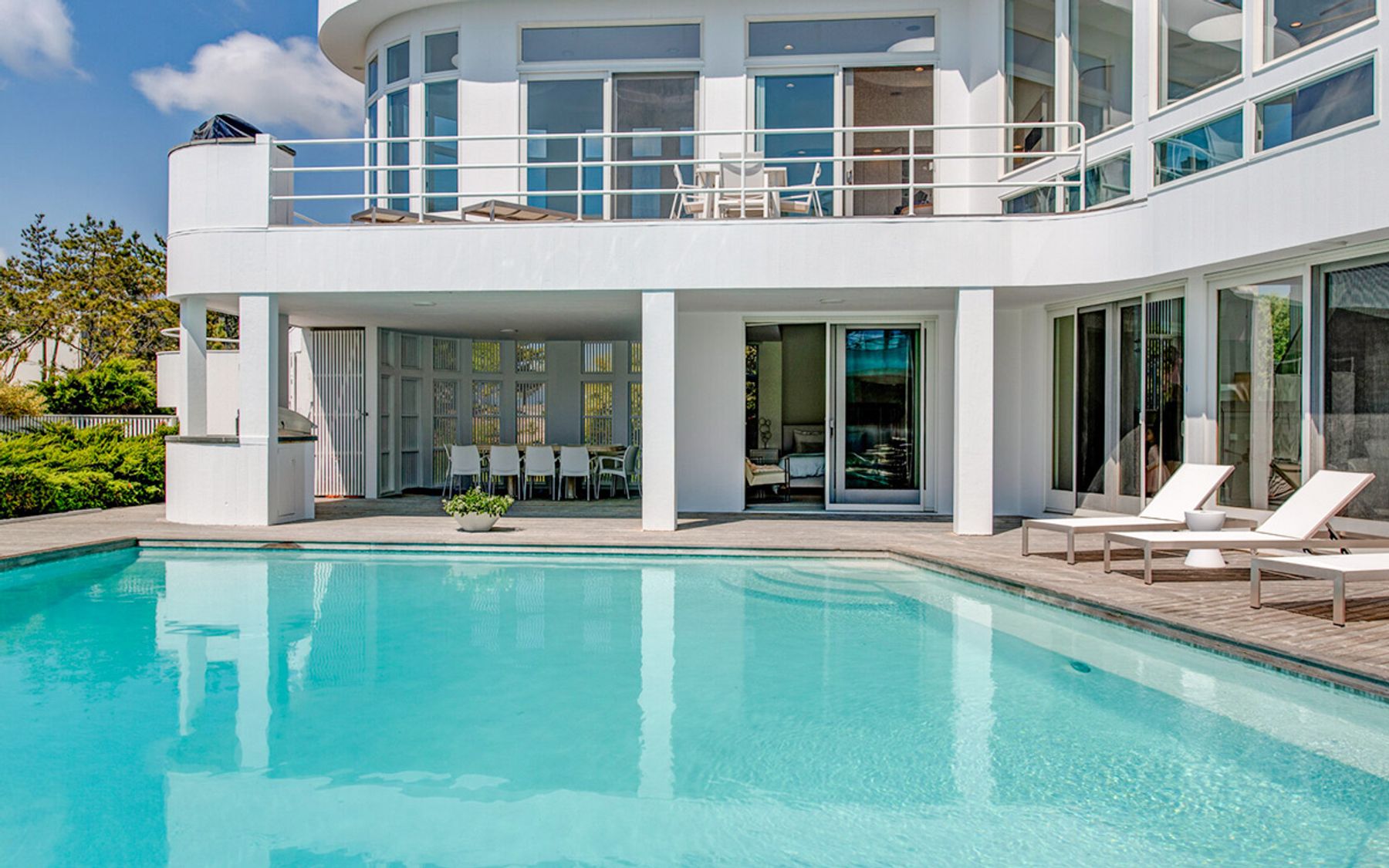
The value of a property built at this scale is that it can hold two moods at once. A shared breakfast or a communal lounge can accommodate the whole group when everyone wants to be together, while multiple bedrooms and bathrooms mean that anyone who wants a slower, more private morning can simply step away without disrupting the rest of the household. That flexibility is often what separates a genuinely restful family trip from one that leaves everyone quietly craving a vacation from the vacation.
For groups planning a wellness-oriented stay together, that balance between togetherness and retreat is often the deciding factor. A villa with generous square footage and enough private corners allows each guest to design their own version of a quiet morning, whether that means an early solo walk, a slow session on a private terrace, or simply extra time alone before the rest of the house wakes up.
Best Time to Visit for a Wellness-Focused Stay
Timing shapes the character of a Hamptons stay more than almost anything else. Midsummer brings the region's most famous energy — full restaurants, busy roads, and a social calendar that runs late into the night. For a wellness-focused trip, the shoulder seasons offer a very different, and arguably more rewarding, experience.
Late spring, particularly May and early June, brings mild temperatures, blooming gardens, and a noticeably quieter pace before the summer crowds arrive. Early autumn, from September through mid-October, offers some of the region's most beautiful light along with warm days and cool nights, all without the density of high summer. Both windows preserve everything that makes a villa stay appealing — private pools, spacious grounds, uninterrupted mornings — while stripping away the traffic and crowds that can make July and August feel more frenetic than restorative.
Even during peak summer, though, a well-chosen villa insulates guests from most of that noise. The privacy of a private home means the surrounding calendar matters far less than it would from a hotel room overlooking a busy street.
Who a Slow-Morning Hamptons Stay Is Best For
This kind of trip tends to appeal to a particular traveler: someone who has already experienced the region's more social side and is now seeking something quieter, or someone who has never felt drawn to the Hamptons' party reputation and assumed, incorrectly, that there was nothing else on offer. It also suits multi-generational families looking for a shared home base with enough room that grandparents, parents, and children can each keep their own rhythm.
Couples looking for a genuine reset, small groups of close friends who prioritize conversation over spectacle, and remote workers extending a stay for a working retreat all tend to find this style of travel particularly satisfying. What unites them is less a demographic than a shared instinct: a preference for depth over density, and for a handful of unhurried days over a packed itinerary.
Is a Villa Better Than a Hotel for a Wellness Retreat?
For travelers specifically seeking rest, a villa holds clear advantages over a hotel. Privacy is the most obvious one. There is no hallway traffic, no adjoining room noise, no shared pool deck full of strangers. A private kitchen also matters more than it might seem; the ability to prepare a simple breakfast at one's own pace, without waiting on hotel dining hours, reinforces the sense that the morning belongs entirely to the guest.
Space is the second advantage. A villa's grounds — gardens, terraces, private pools — offer room to move, stretch, or simply sit outside without negotiating for a lounge chair. And flexibility rounds it out: a villa imposes no schedule. Guests can sleep late, rise early, or shift their entire day around how they feel rather than around a posted itinerary. For a trip built specifically around rest, that flexibility is not a minor convenience. It is the entire point.
Planning a Wellness-Focused Stay
Travelers considering this kind of trip should think first about group size and how much separation each guest will want during the day. A smaller group that values solitude may be best served by a property with an unusually high ratio of space to guests, similar in spirit to Native Light, where every member of the party effectively has room to disappear into their own quiet corner of the house.
A larger family or friend group, by contrast, often benefits from a property built for scale, in the way Artistic Acre is, where shared spaces can hold the whole group comfortably while still leaving enough bedrooms and bathrooms that no one has to sacrifice their own morning routine. In either case, the goal is the same: a home base spacious enough that quiet time never feels like it's being borrowed from someone else's plans.
It's also worth building a loose framework rather than a fixed schedule. A wellness-focused stay works best when a day has an outline — perhaps movement in the morning, quiet time midday, a slow dinner at home — without every hour being accounted for. That structure, held loosely, tends to produce far more genuine rest than an itinerary packed with activities.
A Different Way to Experience the East End
What makes this approach to a Hamptons trip so compelling is that it doesn't require sacrificing anything the region is known for. The beaches, the light, the sense of arrival that comes with crossing onto the East End, all remain intact. What changes is the pace at which a guest moves through them. Rather than chasing the busier social scene, a wellness-focused stay simply steps a few degrees away from it, choosing stillness over spectacle without giving up any of the setting's natural beauty.
That is, in the end, the quiet argument for a villa stay in this part of the world. It offers the option to slow down inside one of the most sought-after landscapes on the East Coast, without needing to justify the choice to anyone. A traveler who wants both — the region's undeniable appeal and a genuinely restorative pace — will find that The Hamptons accommodates both instincts remarkably well, especially from inside a private home built around exactly that kind of morning.
Whether that means the generous, low-density calm of a property like Native Light or the flexible, gather-and-retreat rhythm of a larger home like Artistic Acre, the right villa turns a Hamptons vacation into something closer to a reset than a getaway — a few unhurried days built entirely around quiet mornings, restorative rhythms, and the simple luxury of time that belongs to no one but the traveler who claimed it.

Our Destinations